
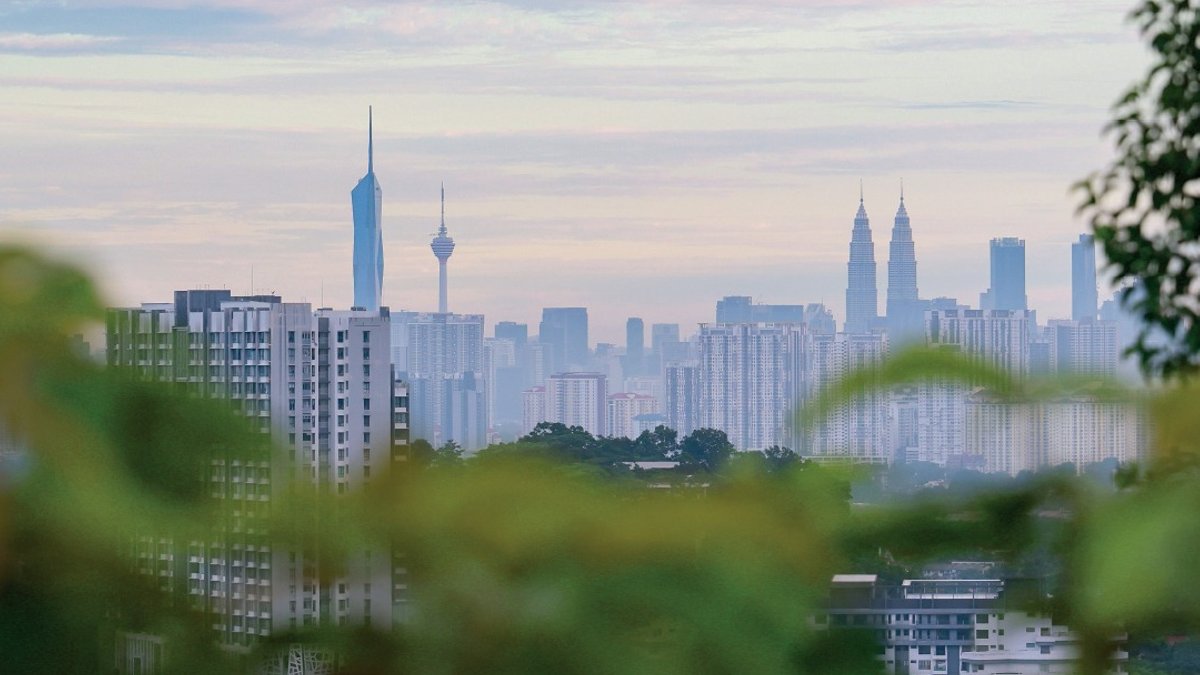
By 2045, 85% of Malaysia’s population will reside in urban areas, positioning city planning as the central influence on the nation’s climate trajectory. At the Cities Climate Connect 2026 conference in Kuala Lumpur, participants agreed that cities must adopt human-centered design, natural integration, and technology-based approaches to combat rising temperatures, water shortages, and infrastructure stress.
Deputy Minister of Natural Resources and Environmental Sustainability Syed Ibrahim Syed Noh described the challenge directly: “The future of Malaysia will increasingly be shaped by the future of our cities. We need cities that stay cool, manage water wisely and where nature remains part of everyday life, where technology solves real problems, and above all, we need cities designed not simply around buildings, roads and infrastructure, but around people.” His statement reflected a shared view that conventional urban planning—centered on roads, buildings, and infrastructure—must shift to prioritize residents and environmental health.
The two-day event, organized by the Malaysia Green Building Council (malaysiaGBC), gathered 300 attendees and 12 exhibitors across four discussions: Climate Action, Circular Built Environment, Urban Resilience, and Future Cities. The conference’s theme—“Where Sustainability and Innovation Converge”—stressed the need for immediate action in a sector accounting for 39% of global greenhouse gas emissions.
Transforming Waste into Building Materials
MVRDV Architecture global research director Sanne van der Burgh demonstrated how waste materials can be converted into high-value construction components. Her firm’s work includes transforming crushed beer bottles into decorative panels for a Bvlgari store and repurposing ocean-collected fishing nets into 3D-printed filament for a Tiffany & Co. location. “Large developments can be opened up to make it human scale, breezy, inviting people in and creating connections that cities need,” she said, emphasizing the importance of canopies, shade, and public spaces in Southeast Asian cities.
Van der Burgh highlighted that building weight directly influences carbon emissions—heavier constructions demand more materials and energy. She argued that lightweight designs could significantly reduce environmental impact without sacrificing structural integrity. She also noted that existing buildings could be transformed, public spaces developed, and systems designed with water and green networks to deliver both environmental and social value.
Although innovative materials and designs exist, their adoption remains inconsistent. The Circular Built Environment Forum revealed that Malaysia’s construction industry has access to certified timber, recycled products, and lifecycle assessment tools. However, scaling these solutions requires stronger regulations and data verification. Malaysian Timber Certification Council (MTCC) CEO Farrah Shameen Mohamad Ashray explained that certification tracks timber from forest to final product, addressing sustainability alongside labor practices, chemical management, and indigenous community rights.
Read Also: ZTE Showcases AI Solutions for ASEAN’s Digital Future
Cost remains a challenge. Rockwool Malaysia’s Logen Chetty noted that without mandatory circularity standards, sustainability initiatives will remain optional. One Click LCA’s Roxanne Del Rosario emphasized that developers must evaluate a building’s full lifecycle, including material longevity, maintenance needs, and disposal, rather than focusing solely on upfront costs.
The panel concluded that Malaysia’s shift toward circular construction depends on verified data, regulatory support, and policy measures to make sustainability a standard requirement.
Combating Urban Heat Through Nature-Based Strategies
Think City’s Benson highlighted low-cost interventions, including targeted tree planting to optimize shade without obstructing airflow and connecting green spaces to form cooling networks. In Penang’s George Town, for instance, waterfront trees must be positioned to direct prevailing winds rather than trap heat. “Roofs are often overlooked,” he added, noting that satellite and thermal imaging can pinpoint surfaces that absorb excessive heat and require cooler alternatives.
The Climate Action Forum shifted focus to Malaysia’s energy transition, where growing demand from data centers and electric vehicles threatens to exceed grid capacity. Solarvest Holdings’ Davis Chong warned that without coordinated investment in renewable energy and infrastructure, the country could lag behind regional competitors. He projected 7 to 12 gigawatts of new demand from data centers alone over the next decade, requiring a mix of solar, green hydrogen, and bioenergy to meet needs sustainably. Chong emphasized that policy changes must be paired with engineering projects, such as smart grids and energy storage, to prevent bottlenecks.
C40 Cities’ Murali Ram reinforced the importance of repurposing existing structures instead of expanding urban areas. He highlighted Kuala Lumpur’s pilot projects, where cooling stations with shaded areas and misting systems were installed in low-income neighborhoods to reduce heat exposure. The initiative also incorporated natural canopies along transit routes, minimizing reliance on energy-intensive cooling. Murali noted that 50% of urban emissions in Southeast Asian cities come from buildings, followed by transportation and waste, stressing the need for compact, transit-oriented developments that prioritize reuse over new construction. His call to limit unnecessary expansion aligns with global trends toward adaptive reuse, where buildings like malls and hotels are retrofitted to extend their useful life and preserve embodied carbon.


Leave a Reply