
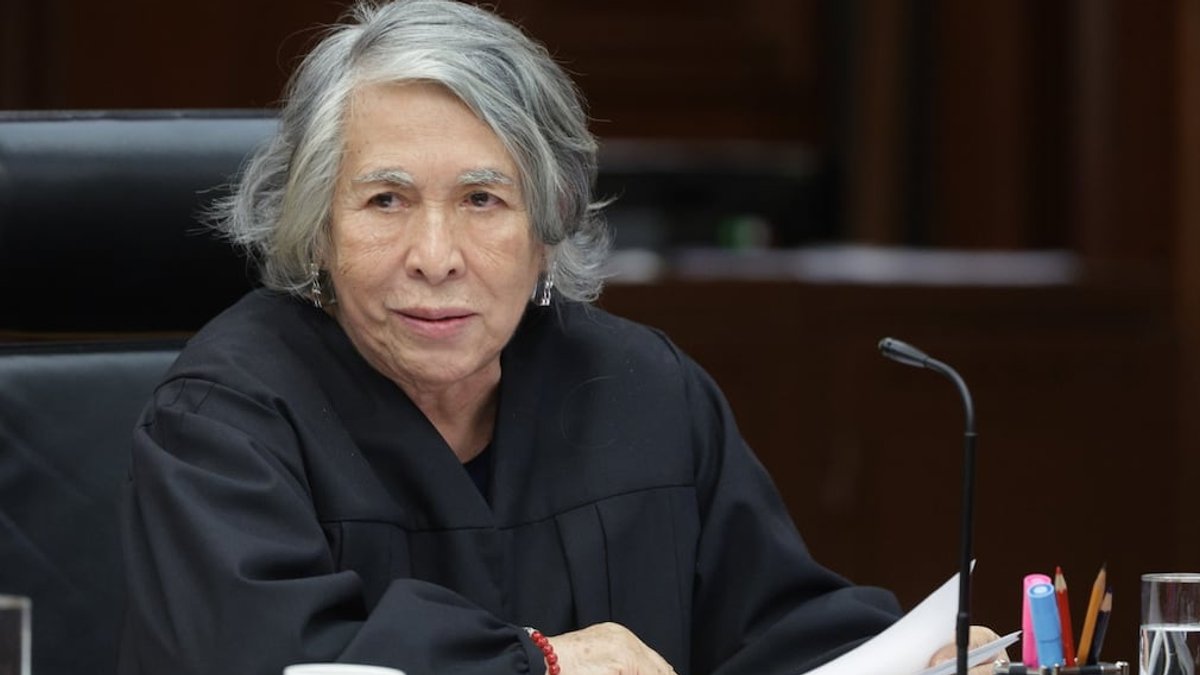
Minister María Estela Ríos González publicly accused several of her colleagues of disregarding the authority of her office during a session of the Supreme Court of Justice of the Nation (SCJN), a body that adjudicates constitutional matters in Mexico.
During that session she presented a draft that sought to reject an amparo petition that challenged the constitutionality of Article 183 of the Telecommunications and Broadcasting Law, a provision that obliges service providers to hand over specific electronic data to the judiciary. The majority of the justices, however, rejected the methodological approach she had used and asked her to incorporate a series of changes that she refused to accept.
A heated exchange
Ríos González argued that she was being compelled to insert language into her draft that conflicted with her legal interpretation. She suggested that, if the majority could not reach consensus, they should simply cast a negative vote on her proposal and reassign the case to a different minister for further handling.
Read Also: Musk, Trump, West Back Huang’s Nvidia Return
When the bench declined her request to transfer the file, the minister’s demeanor changed noticeably; she displayed visible frustration and delivered a forceful statement, “I do ask that my decision be respected, because the alternative is a lack of respect for my approach. I don’t think you can force me to do things your way.”
Chief Justice Hugo Aguilar Ortiz stepped forward and tried to assure the chamber that no insult was intended, yet the minister interrupted him repeatedly, insisting that her perspective was being ignored.
The core of the debate
The dispute centered on the scope of Article 183, which mandates that telecommunications operators retain and, when ordered, provide authorities with metadata such as call logs, internet traffic records, information about signal blocking, and the real-time geolocation of devices. This requirement is intended to give the judiciary a tool for investigating serious crimes.
Read Also: Asian stocks slump as AI oil concerns rise
The complainant, a civil-rights organization, contended that the article infringed on a range of constitutional guarantees, including the right to privacy, data protection, freedom of expression, freedom of association, access to information, and the principle of due process. The Court, after reviewing the arguments, concluded that the provision was compatible with the constitution and did not breach any of the cited rights.
The tribunal emphasized that the statutory language refers explicitly to the National Code of Criminal Procedure and to the Personal Data Protection Law, thereby embedding procedural safeguards that limit how the data may be accessed and used.
Resolution and impact
After several hours of negotiation, the minister eventually consented to amend her draft in line with the majority’s suggestions. The final ruling of the SCJN reaffirmed the legal duty of telecommunications providers to cooperate with judicial orders by supplying the designated metadata.


Leave a Reply