
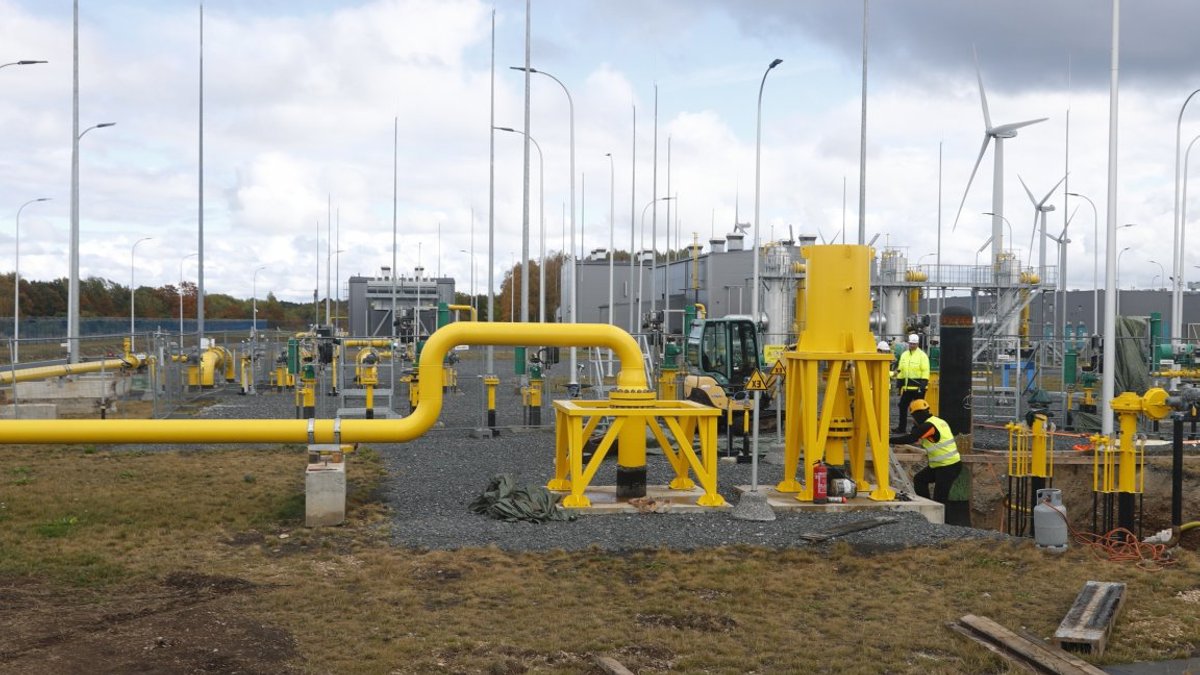
The U.S. energy sector’s push into the Western Balkans has drawn criticism from EU officials, who fear the region may become overly reliant on American fossil fuels just as it seeks to align with the European Union’s clean energy objectives.
Albania, Kosovo, and Bosnia and Herzegovina have signaled interest in importing significant volumes of liquefied natural gas (LNG) from the U.S. or constructing infrastructure to support these deliveries. Their governments argue that gas serves as a temporary replacement for Russian supplies and coal, while they shift toward renewables—a prerequisite for EU membership bids. However, EU representatives question whether these projects are justified given the region’s low domestic demand for gas. They caution that flooding markets with gas could trap these countries in long-term dependency on foreign imports, undermining their decarbonization pledges.
The EU’s 2050 net-zero emissions target and renewable energy requirements for new members could be weakened by increased gas imports. Meanwhile, the U.S. gas industry is leveraging Europe’s move away from Russian supplies and tight global markets, further strained by the war in Ukraine, to secure supply agreements across the region under what critics describe as an “energy dominance” approach.
Read Also: EU split over phased banking reform proposal
András Huubner, who oversees the EU Commission’s energy diplomacy in the Western Balkans, stated at a Vienna forum that these nations had committed to decarbonization as part of their EU accession processes. He warned that importing more gas would “contradict this core decarbonization goal.” Huubner added that such deals risk extending beyond replacing Russian supplies and instead “further carbonizing” the region. “We should not deliver gas to markets that do not need it,” he emphasized.
A preliminary agreement between Washington and Bosnia to construct a pipeline delivering gas from Croatia’s Krk Island has become a flashpoint. After Bosnia’s parliament approved legislation naming a small firm, AAFS, connected to associates of former U.S. President Donald Trump, as the lead operator, corruption allegations emerged alongside concerns about decarbonization efforts.
EU officials have labeled the project a potential obstacle to Bosnia’s EU candidacy. Huubner noted that the EU ambassador had raised these issues in writing, though the Commission has yet to outline further steps. Internal EU documents, reviewed by Politico, show worries about the AAFS contract’s lack of transparency and the risks posed by gas expansion.
Read Also: Kinza Targets Southeast Asia After Middle East Success
The Energy Community, an EU-backed initiative assisting candidate countries, including Bosnia, Albania, Kosovo, Serbia, Georgia, Moldova, Montenegro, and North Macedonia, in aligning with EU standards, has also voiced alarm. Its director, Artur Łorkowski, stated that the EU’s position toward Bosnia is clear: while EU law does not dictate a specific supplier, fair competition, transparency, and equal access must apply universally.
Neither Bosnia’s nor Albania’s agreements have been finalized. Bosnia’s interconnector still requires approval from its upper house, while Albania’s proposed 20-year supply deal with Greece and U.S. firm Venture Global remains a memorandum pending feasibility studies. Kosovo has not yet reached a decision, and Serbia and North Macedonia are expected to receive U.S. LNG through a planned interconnector with Greece.


Leave a Reply