
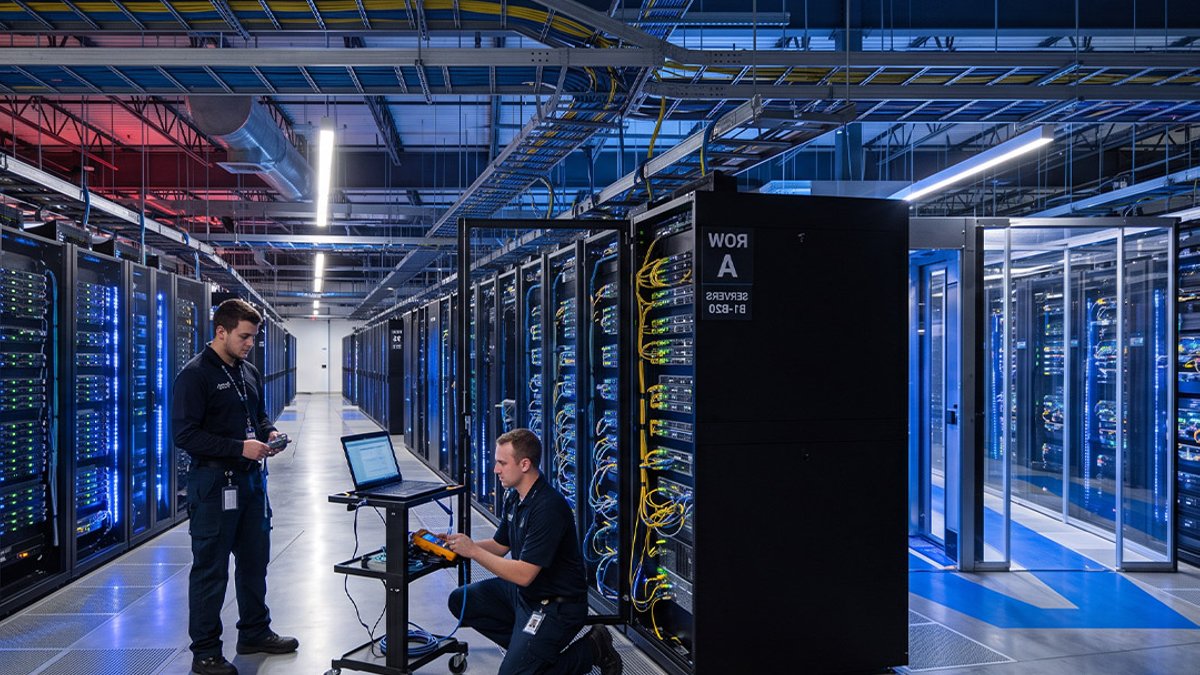
The data centre sector, once a stable corner of global IT infrastructure, now faces high stakes due to the AI-driven transformation. Since late 2022, facilities have shifted from supporting cloud storage and enterprise workloads to powering energy-intensive AI model training. Unlike traditional centres, these new operations depend on GPUs instead of CPUs, consume far more electricity, and generate greater heat output.
By 2030, AI workloads could occupy over half of all data centre capacity, according to McKinsey & Company, turning a predictable utility into a speculative investment. Australia has emerged as a key player in this evolution. Since 2020, the country’s investment in data centre construction, server racks, and processing equipment has increased fivefold, contributing significantly to its business investment growth.
Major tech firms like Amazon Web Services, Microsoft Azure, and Google Cloud have announced multi-billion-dollar capital expenditure plans, while local operators such as NextDC and Goodman Group have expanded aggressively. The country’s advantages—affordable land, abundant renewable energy potential, and strategic location near Asia—have made it an attractive destination. However, five significant risks threaten to disrupt this growth trajectory. Electricity consumption presents the most immediate challenge.
Data centres now account for 40% to 60% of their total operating costs, with global power demand doubling since 2020 and representing nearly 2% of worldwide electricity usage. The International Energy Agency predicts this figure will double again by 2033. In Australia, data centres already consume about 2% of the national grid’s output, but that share could climb to 10% over the next decade if current growth trends persist. The issue extends beyond sheer demand to reliability and timing.
Data centres require uninterrupted power, 24 hours a day, regardless of weather-dependent renewable sources. Grid-connection wait times vary dramatically: developers in Sydney face a three-year backlog, while in Paris, London, and Frankfurt, the wait stretches to seven years. In Amsterdam and Tokyo, it can take a decade. This bottleneck reflects not just availability but fierce competition for power among data centres, households, miners, and manufacturers.
Rising electricity prices could make new projects financially unviable without broader economic strain. Efficiency improvements offer partial relief. The IEA reports that energy use per AI task has declined by roughly 90% annually in recent years. A basic text query now consumes less power than running a television for the same duration. Companies like DeepSeek and Moonshot AI’s Kimi are achieving comparable performance with older, less power-hungry chips.
Despite these gains, total demand will still rise as AI adoption expands, though the growth rate may moderate as technology matures. A secondary benefit lies in grid economics. Large data centres can stabilize electricity markets by absorbing excess supply during periods of low demand. In Australia, wholesale electricity prices sometimes drop below zero when solar output peaks midday.
Data centres, with their constant power needs, can help balance the grid, spreading fixed costs across more consumers. Long-term power purchase agreements—common in the sector—can also accelerate renewable energy projects by serving as anchor tenants for wind and solar farms. Governments are increasingly mandating green energy use: in Ireland, new facilities must meet 80% of demand with additional renewables, while Singapore requires at least 50% of new capacity to come from clean sources.
The AI boom has created a financing gap that poses additional risks. Hyperscalers’ free cash flow grew by about 26% annually over the past three years, but their capital expenditure rose far faster, by 55%, 72%, and 96% year-over-year between 2024 and 2026. To bridge this funding shortfall, companies have turned to debt markets.
Corporate bonds remain the main funding source, with issuance by the top five companies exceeding US$100 billion in each of the past two years. Most debt is long-dated to match multi-year reconstruction timelines. On-balance-sheet debt has grown by 35% a year over the past two years for the largest hyperscalers. Yet that roughly US$200bn increase covers only a quarter of this year’s planned capex, and an even smaller share of next year’s plans.
Beyond traditional bonds, firms are using complex financing structures. Companies like OpenAI and Anthropic secure equity partnerships with investors such as SoftBank or Macquarie, while others employ off-balance-sheet arrangements, including long-term leases with special purpose vehicles (SPVs) that own the data centres. These commitments provide predictable cash flows, allowing SPVs to borrow against future payments without the debt appearing on the parent company’s books.
The result is lower leverage ratios, preserved credit ratings, and easier access to bond markets. However, this approach obscures true financial risk. Three key risks emerge from these financing strategies. First, the interconnected nature of these contracts makes it difficult for investors to assess leverage, cash flow reliability, or concentration risk. Second, higher interest rates or wider credit spreads could strain refinancing efforts as debt matures in approximately five years.
Currently, investment-grade corporate spreads remain narrow, keeping financing affordable, but further Federal Reserve rate hikes could widen them, particularly for weaker issuers like Oracle, which holds a BBB rating with a negative outlook. Third, this asset class lacks a full economic cycle’s worth of performance data. Without a downturn to test it, investors may not yet fully grasp the risks involved. Transparency remains a critical issue.
One photographer who received a unit from a hyperscaler in 2023 described the process as opaque. They explained that companies sign a lease, build the facility, and suddenly lock clients into long-term commitments with no visibility on costs. Tracking these obligations required digging through the footnotes of 10-K filings. If revenue falls short, companies may struggle to meet long-term lease payments, potentially dragging down share prices relative to earnings.
Construction delays add another layer of risk. Data centres take years to build and equip, leaving operators vulnerable if revenue materializes too slowly or if more efficient competitors enter the market. Chips can become obsolete quickly, reducing a facility’s value or the computing power required per task. For now, strong balance sheets and signed customer contracts shield the major hyperscalers, but the long-term outlook depends on whether demand sustains, or whether overcapacity depresses tech valuations.
The sector’s future hinges on handling these challenges while capitalizing on Australia’s strategic advantages. If power constraints, financing risks, and construction delays can be mitigated, the country’s data centre boom could continue unabated. However, without careful planning, these risks could slow or even reverse the growth momentum. The balance between opportunity and risk will determine the sector’s trajectory in the coming years.


Leave a Reply