
For the past ten years, AmFIRST Real Estate Investment Trust (REIT) has largely operated below the radar. Its unit value has remained flat, dividend payments have shrunk, and the trust has not pursued any new property acquisitions during this period.
“We’ve maintained a relatively low profile,” AmFIRST REIT CEO Chong Hong Chuon stated in an exclusive interview. “Our existing properties haven’t generated sufficient returns to sustain dividend distributions. The reduced payouts contributed to declining share prices.”
Since its listing on Bursa Malaysia’s Main Market in December 2006, the predominantly office-focused REIT has mirrored the challenges faced by the commercial office sector.
“The market forces have shifted dramatically since our inception,” Chong observed. “After a decade and a half, the subsector experienced an oversupply crisis. Vacancy rates climbed as additional office space entered the market, making it increasingly difficult to maintain rental growth while occupancy pressures persisted. These structural issues directly impacted our operations.”
Stagnant Acquisitions and Share Price Decline
The REIT’s most recent property acquisition—the Mydin Hypermall in Bukit Mertajam, Penang—occurred over a decade ago. Chairman Azlan Baqee Abdullah noted that no new purchases have been made since 2015, coinciding with a period of declining share prices.
“When our unit price fell, launching rights issues became problematic due to potential shareholder dilution,” Azlan explained. “Expansion wasn’t viable at the time, as it would have burdened existing investors. Our priority was protecting shareholder value rather than pursuing growth through acquisitions. The focus instead turned to improving our income-generating capabilities, though external challenges complicated these efforts.”
“We faced multiple headwinds: an office market glut, the Covid-19 pandemic, and shifting consumer behaviors driven by digital commerce,” he continued. “Online shopping reduced foot traffic, severely affecting our car park revenues—once our largest income source. With visitor numbers plummeting, acquiring new assets wasn’t a financially sound option.”
In the post-pandemic recovery phase, management shifted strategy to stabilize earnings. “Acquisitions typically require either debt reduction or external fundraising,” Chong noted. “Given limited borrowing capacity, we prioritized divesting underperforming assets to free up capital and improve financial flexibility.”
Asset Sales Fund Financial Restructuring
As part of this restructuring, AmFIRST REIT sold non-core properties, including the AmBank Group Leadership Centre in 2015 and Menara AmFIRST in 2022. The proceeds from these transactions are now being deployed to strengthen the REIT’s financial foundation.
“The capital generated from selling Menara AmBank will allow us to pursue high-impact acquisitions aligned with our diversification objectives,” Chong stated.
Alongside asset sales, management has intensified efforts to enhance operational performance.
“Over the past two years, our team has concentrated on stabilizing and optimizing the portfolio,” Chong said.
Co-Working Spaces Boost Revenue
The REIT has successfully secured new leases covering 180,000 square feet, adding RM6.7 million annually to its revenue stream. Additionally, it has expanded beyond traditional income sources by introducing co-working spaces into its portfolio.
Deputy CEO and head of investment Zuhairy Md Isa confirmed that International Workplace Group (IWG) manages these flexible workspaces. Under the arrangement, IWG earns management fees based on a percentage of the revenue generated.
Currently, IWG operates three co-working brands: Regus at Menara Summit in Subang Jaya, Regus at Prima 9 in Cyberjaya, and HQ at Menara AmBank in Kuala Lumpur. Regus targets corporate clients, while HQ caters to budget-conscious professionals such as freelancers.
“These flexible tenancy models have delivered strong additional income,” Chong reported. “The return on investment exceeds 30% annually, while the short-term leases ensure high occupancy rates, premium rents, and increased car park utilization.”
Financial improvements are reflected in the REIT’s latest annual results. For the fiscal year ending March 31, 2026, net property income rose by 5% year-over-year to RM64.1 million, up from RM61.04 million. Total revenue increased by 5.2% to RM110.26 million. The distribution per unit reached 2.87 sen, a 19.6% increase from the previous year’s 2.4 sen. Management credited these gains to higher occupancy levels, new revenue from co-working spaces, and disciplined cost management despite rising utility costs, minimum wage adjustments, and the implementation of sales and service taxes.
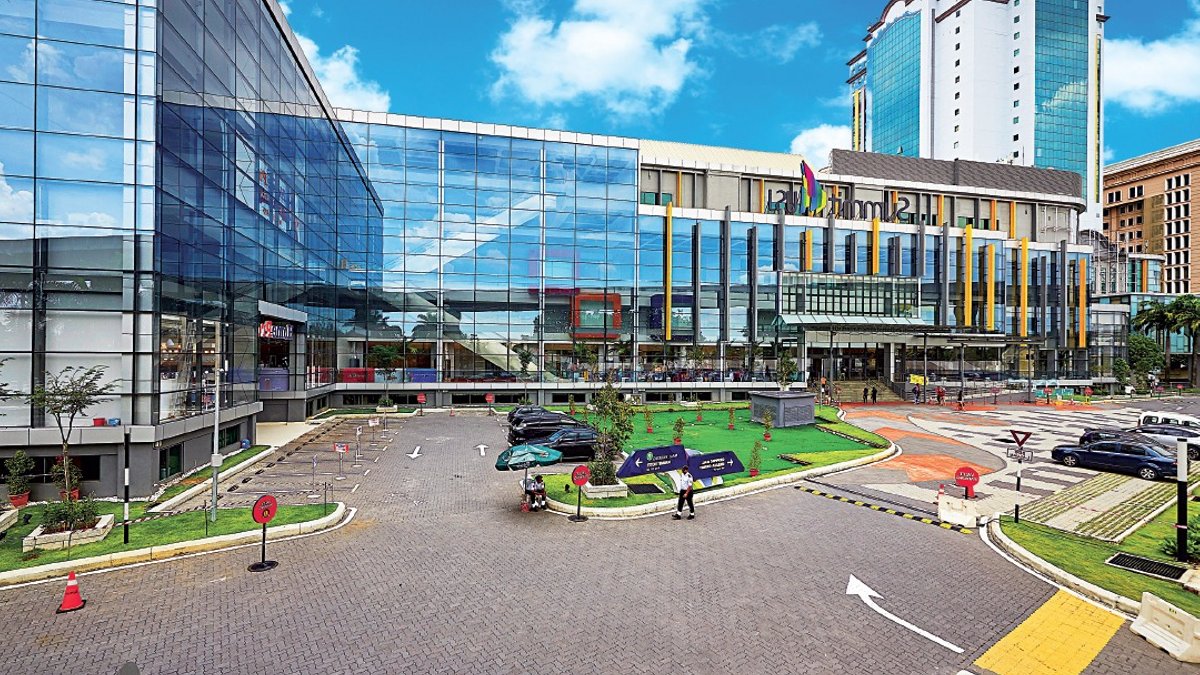
The REIT has also undertaken significant upgrades to its aging assets. Renovation work at The Summit Hotel in Subang Jaya commenced in May, with a planned completion date of January 2027. The project is being executed in two phases, with the first phase due for completion next month.
“We initially attempted to sell the property as it was non-core,” Chong explained. “However, after failing to secure a buyer, we opted to maximize its value through a new operating agreement. The selected operator agreed to pay RM600,000 in monthly rent while we invest RM45 million in refurbishments.”
Upon completion, the hotel will rebrand as Portrait Hotel Subang Jaya and will be operated by Mana-Mana Holdings Sdn Bhd, a subsidiary of Exsim Hospitality Bhd. The upgrades will modernize public areas and guest rooms to align with current market expectations.
Zuhairy clarified that the hotel will maintain its business-oriented positioning. “It remains a city/business hotel, featuring a large ballroom and function space capable of hosting up to 1,000 attendees. Our focus will shift toward attracting meetings, incentives, conferences, and exhibitions (MICE) clients.”
For the broader mixed-use development, management is introducing another co-working center, HQ at Menara Summit, and has organized community events at the mall to support a more lively atmosphere.
Menara AmBank Sale Cuts Debt
Another key recovery initiative involves identifying and disposing of underperforming assets. Following the sales of the AmBank Group Leadership Centre and Menara AmFIRST, the REIT announced in June the planned sale of Menara AmBank for RM331 million to AMMB Holdings Bhd.
The 46-story freehold office tower has a net lettable area of 453,419 square feet and currently operates at a 77.8% occupancy rate. AmBank remains the anchor tenant, occupying 65.6% of the space.
“This property generates yields below our borrowing costs, a negative spread asset,” Chong noted. “Disposing of it reduces our debt obligations, creating a positive credit impact. While debt repayment is a key benefit, our strategy extends beyond that.”
The transaction is expected to yield a capital gain of approximately RM51.1 million, with proceeds allocated toward debt reduction. If approved, the sale would lower the REIT’s gearing ratio from 46.6% to an estimated 33.9%, providing financial flexibility for future diversification efforts.
“We will leverage this improved capital structure to acquire meaningful assets that align with our diversification plans,” Chong reiterated.
The shareholder vote on the sale is scheduled for the extraordinary general meeting on September 21.
AmFIRST REIT’s current portfolio comprises 65% office properties, 25% retail spaces, and 5% hotels. Key assets include Bangunan AmBank Group, Menara AmBank, Wisma AmFIRST, Prima 9, Prima 10, Jaya 99 (office and retail), Mydin Hypermarket, and The Summit Subang USJ (office, hotel, and retail).
As part of its diversification strategy, management aims to reduce office sector exposure. “For meaningful diversification, the new asset class, potentially hospitals, industrial facilities, or educational properties, should represent 20% to 30% of our portfolio,” Chong stated. “After selling Menara AmBank, our office property share will decrease from 65% to 45%. This will allow us to allocate 25% of the proceeds toward acquiring defensive, higher-yielding assets.”


Leave a Reply